Twelve kinds of taste
Which one are you?
Rate five things you know, from any shelf. Your archetype shows up in about a minute, and gets sharper with every log.
Rate five things you know, from any shelf. Your archetype shows up in about a minute, and gets sharper with every log.

Drama 125 min
Rotten Tomatoes97%Metacritic
China, 1920. One master, four wives.
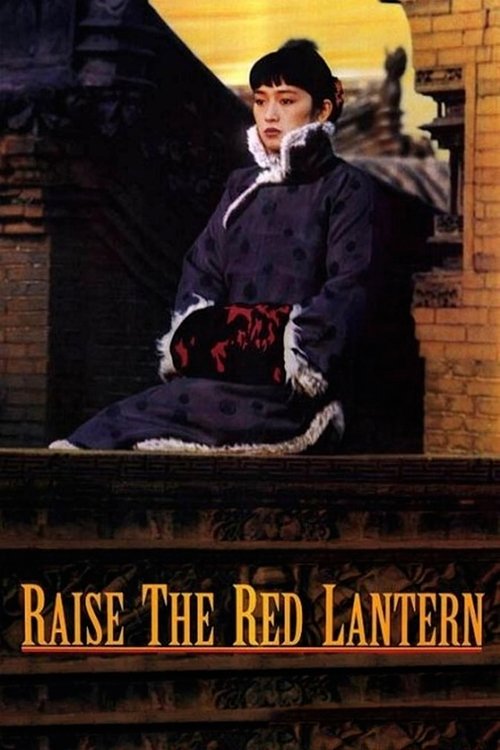
In 1920s China, 19-year-old Songlian becomes a concubine of a powerful lord and is forced to compete with his three wives for the privileges gained.
Join free to log it and keep your ratings, or see your odds on it first.
No profiled raters yet.

No reviews yet. Yours would be the first word on it.
Written by TMDB members; each links to the original. Not part of Taste Buds's numbers.
**In the context of oriental cinema, it's a good film... but it's very different from the cinema that we, in the West, are used to, and this difference ends up killing our interest in this work.** I think this movie was the first Chinese movie I saw, I'm not really sure. I am not an expert on the cinema of this country, but I can say that it is one of those films that you see without much special interest. Of course, I'm talking about the standard audience, because there are really oriental film lovers who will be more interested in this material. The script is based on the story of Song Lian, a very young and well-formed girl who, after her father's death, is coerced into finding a rich man to marry. She ends up being the fourth wife of a man, having to live with the other wives and learn how to behave in a complex family system, where rivalries and envy are part of everyday life. The film shows us a type of family life that, for us in the West, is far from being understandable. It could only take place in strongly patriarchal societies, where the role of women is more than subordinate. It's not a great film, but it's frankly decent, and I don't rule out the likelihood that it's a
Read the whole review on TMDB**Raise the Red Lantern:** Directed by Zhang Yimou, Raise the Red Lantern (大红灯笼高高挂) stands as a seminal work in Chinese cinema, premiering in 1991 and adapted from Su Tong's novel Wives and Concubines. The film achieved international acclaim, winning the Golden Lion at the Venice Film Festival and earning nominations for the BAFTA Award for Best Foreign Language Film, solidifying its status as a landmark critique of feudal patriarchy. **Theme: Critique and Reflection on Feudal Ethics** The theme of Raise the Red Lantern is profound and weighty, offering a comprehensive critique and reflection on feudal ethics through its portrayal of women's fates in the Chen family compound. While feudal ethics once played a role in social stability and development in Chinese history, by modern times, they had gradually become shackles restricting people's thoughts and actions. In the film, the drawbacks of feudal ethics are vividly displayed. First, feudal ethics suppress and distort human nature. In the Chen family compound, women's personalities and desires are completely repressed, and they lose their basic rights and dignity as human beings. Songlian, originally a woman with independent thoug
Read the whole review on TMDBChecking availability…
Companions we picked from the closest works, and how to take them.
Recommendations from TMDB. Opening one adds it to Taste Buds
Answer first; then see how everyone, and your circle, split.
“Is this Zhang Yimou's best work?”
Sign in to answer.
Be the first to answer.
“Is the polish hiding a lack of heart?”
Sign in to answer.
Be the first to answer.
“Is it the best drama film of its decade?”
Sign in to answer.
Be the first to answer.
If you loved this film, the television, the book, the music, the game.
No US service lists it yet, per JustWatch via TMDB.