Twelve kinds of taste
Which one are you?
Rate five things you know, from any shelf. Your archetype shows up in about a minute, and gets sharper with every log.
Rate five things you know, from any shelf. Your archetype shows up in about a minute, and gets sharper with every log.

Translations into English, Social life and customs, War in Fiction, Readers
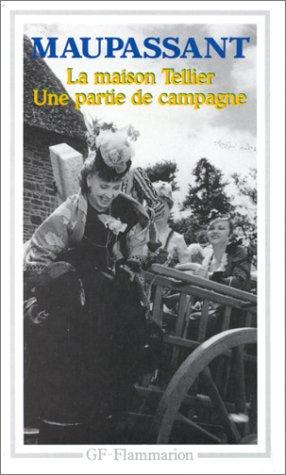
The title story of this collection is, like many of the others, set during the Franco-Prussian war. As in so many of Maupassant’s stories he explores class barriers and looks at the contrasts between the French and German combatants.
Sign in to log this.
Cool, effortless, spare and prestige.
No profiled raters yet.

No reviews yet. Yours would be the first word on it.
On Open Library, 4 have read it and 35 want to.
“The Prussian Commander, Major Graf von Farlsberg, was finishing the reading of his mail, comfortably seated in a large tapestry armchair, with his booted feet resting on the elegant marble of the mantelpiece on which, for the last three months that he had been occupying the Chateau d'Uville, his spurs had traced two deep grooves, growing deeper every day.”
Guy de Maupassant, né le 5 août 1850 au château de Miromesnil près de Tourville-sur-Arques (France) et mort le 6 juillet 1893 dans le 16e arrondissement de Paris, est un écrivain et journaliste littéraire français. Lié à Gustave Flaubert et à Émile Zola, Maupassant a marqué la littérature française par ses six romans, dont *Une vie* en 1883, *Bel-Ami* en 1885, *Pierre et Jean* en 1887-1888, et surtout par ses nouvelles (parfois intitulées contes) comme *Boule de Suif* en 1880, les *Contes de la bécasse* (1883) ou Le Horla (1887). Ces œuvres retiennent l’attention par leur force réaliste, la présence importante du fantastique et par le pessimisme qui s’en dégage le plus souvent, mais aussi pa
Closest on the same fourteen dimensions, from everything scored on Taste Buds. Other media included when they land close.