Twelve kinds of taste
Which one are you?
Rate five things you know, from any shelf. Your archetype shows up in about a minute, and gets sharper with every log.
Rate five things you know, from any shelf. Your archetype shows up in about a minute, and gets sharper with every log.
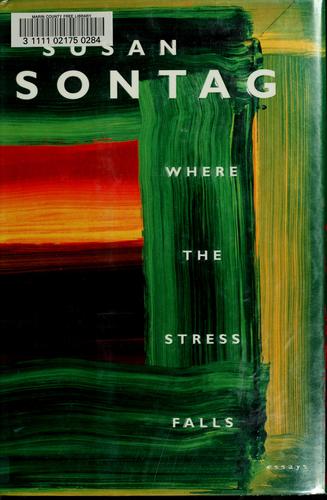
Essays (single author), American literature, Modern Literature, History and criticism
"Susan Sontag has said that her earliest idea of what a writer should be was "some-one who is interested in everything." Thirty-five years after her first collection of essays, the now classic Against Interpretation, our most important essayist has chosen more than forty longer and shorter pieces from the last two decades that illustrate a deeply felt, kaleidoscopic array of interests, passions, observations, and ideas."--BOOK JACKET.
Sign in to log this.
Spare, character-led, prestige and contemplative.
No profiled raters yet.

No reviews yet. Yours would be the first word on it.
On Open Library, 8 want to.
“"I WHO WOULD BE nothing without the Russian nineteenth century...," Camus declared, in 1958, in a letter of homage to Pasternak-one of the constellation of magnificent writers whose work, along with the annals of their tragic destinies, preserved, recovered, discovered in translation over the past twenty-five years, has made the Russian twentieth century an event that is (or will prove to be) equally formative and, it being our century as well, far more importunate, impinging.”
Susan Sontag (January 16, 1933 – December 28, 2004) was an American writer, filmmaker, philosopher, teacher, and political activist. She mostly wrote essays, but also published novels; she published her first major work, the essay "Notes on 'Camp'", in 1964. Her best-known works include *On Photography*, *Against Interpretation*, *Styles of Radical Will*, *The Way We Live Now*, *Illness as Metaphor*, *Regarding the Pain of Others*, *The Volcano Lover*, and *In America*. Sontag was active in writing and speaking about, or travelling to, areas of conflict, including during the Vietnam War and the Siege of Sarajevo. She wrote extensively about photography, culture and media, AIDS and illness, h
Closest on the same fourteen dimensions, from everything scored on Taste Buds. Other media included when they land close.