Twelve kinds of taste
Which one are you?
Rate five things you know, from any shelf. Your archetype shows up in about a minute, and gets sharper with every log.
Rate five things you know, from any shelf. Your archetype shows up in about a minute, and gets sharper with every log.

Fiction, Middle class men, Harry Angstrom (Fictitious character), Middle-aged men
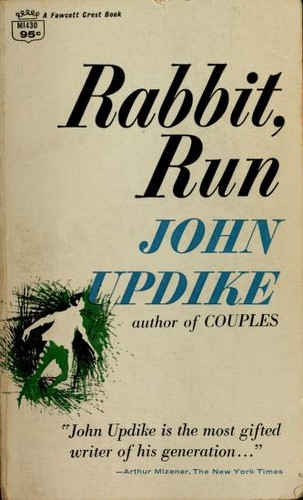
It's 1989, and Harry 'Rabbit' Angstrom is far from restful. Fifty-six and overweight, he has a struggling business on his hands and a heart that is starting to fail. His family, too, are giving him cause for concern.
Sign in to log this.
Prestige, contemplative, spare and character-led.
No profiled raters yet.

No reviews yet. Yours would be the first word on it.
On Open Library, 5 have read it and 10 want to.
“STANDING amid the tan, excited post-Christmas crowd at the Southwest Florida Regional Airport, Rabbit Angstrom has a funny sudden feeling that what he has come to meet, what's floating in unseen about to land, is not his son Nelson and daughter-in-law Pru and their two children but something more ominous and intimately his: his own death, shaped vaguely like an airplane.”
John Hoyer Updike (March 18, 1932 – January 27, 2009) was an American novelist, poet, short-story writer, art critic, and literary critic. One of only four writers to win the Pulitzer Prize for Fiction more than once, Updike published more than twenty novels, more than a dozen short-story collections, as well as poetry, art and literary criticism and children's books during his career. Hundreds of his stories, reviews, and poems appeared in *The New Yorker* starting in 1954. He also wrote regularly for *The New York Review of Books.* His most famous work is his "Rabbit" series, which chronicles the life of the middle-class everyman Harry "Rabbit" Angstrom over the course of several decades,
Closest on the same fourteen dimensions, from everything scored on Taste Buds. Other media included when they land close.