Twelve kinds of taste
Which one are you?
Rate five things you know, from any shelf. Your archetype shows up in about a minute, and gets sharper with every log.
Rate five things you know, from any shelf. Your archetype shows up in about a minute, and gets sharper with every log.

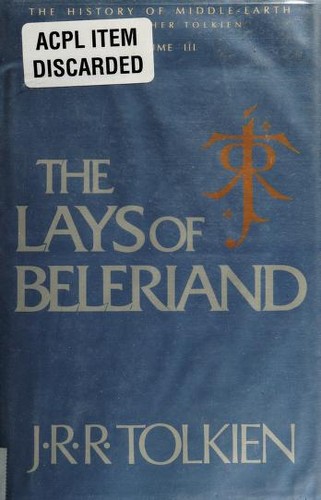
Fantasy fiction, Short stories, Middle Earth (Imaginary place), Elves
A number-one New York Times bestseller when it was originally published, The Silmarillion is the core of J.R.R. Tolkien's imaginative writing, a work whose origins stretch back to a time long before The Hobbit.
Sign in to log this.
Epic, richly built, contemplative and plot-driven.
No profiled raters yet.

No reviews yet. Yours would be the first word on it.
On Open Library, 188 have read it and 930 want to.
“There was Eru, the One, who in Arda is called Ilúvatar; and he made first the Ainur, the Holy Ones, that were the offspring of his thought, and they were with him before aught else was made.”
John Ronald Reuel Tolkien (1892-1973) was a major scholar of the English language, specialising in Old and Middle English. Twice Professor of Anglo-Saxon (Old English) at the University of Oxford, he also wrote a number of stories, including most famously The Hobbit (1937) and The Lord of the Rings (1954-1955), which are set in a pre-historic era in an invented version of the world which he called by the Middle English name of Middle-earth. This was peopled by Men (and women), Elves, Dwarves, Trolls, Orcs (or Goblins) and of course Hobbits. He has regularly been condemned by the Eng. Lit. establishment, with honourable exceptions, but loved by literally millions of readers worldwide. In the
Closest on the same fourteen dimensions, from everything scored on Taste Buds. Other media included when they land close.


Answer first; then see how everyone, and your circle, split.
“Is The Silmarillion better than The Hobbit?”
Sign in to answer.
Be the first to answer.
“Is the world more interesting than the story?”
Sign in to answer.
Be the first to answer.
“Is the slow pace a feature rather than a flaw?”
Sign in to answer.
Be the first to answer.