Twelve kinds of taste
Which one are you?
Rate five things you know, from any shelf. Your archetype shows up in about a minute, and gets sharper with every log.
Rate five things you know, from any shelf. Your archetype shows up in about a minute, and gets sharper with every log.

Hydrogen bomb, History, Audiocassettes, Long Now Manual for Civilization
In this work of history, science and politics, Richard Rhodes, the Pulitzer Prize-winning author of The Making of the Atomic Bomb, tells for the first time the secret story of how and why the hydrogen bomb was made; traces the path by which "the Bomb", the supreme artifact of twentieth-century science and technology, became the defining issue of the Cold War; and reveals how close the world came to nuclear…
Join free to log it and keep your ratings, or see your odds on it first.
No profiled raters yet.

No reviews yet. Yours would be the first word on it.
On Open Library, 6 want to.
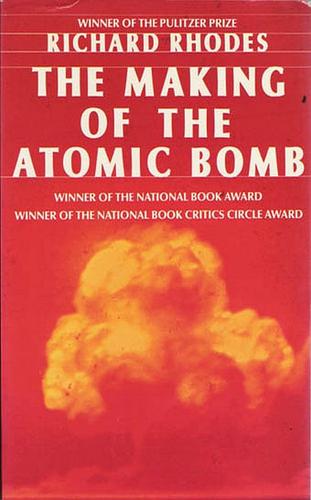
“EARLY IN JANUARY 1939, nine months before the outbreak of the Second World War, a letter from Paris alerted physicists in the Soviet Union to the startling news that German radiochemists had discovered a fundamental new nuclear reaction.”
Richard Rhodes was born in Kansas City, Kansas. After graduating with honors from Yale in 1959, he worked for Hallmark Cards and was a contributing editor for Harper’s and Playboy magazines. He is the author of more than fifty articles, and ten books, including Looking for America: A Writer’s Odyssey (1979); Making Love: An Erotic Odyssey (1993); Voyage of Rediscovery: A Cultural Odyssey Through Polynesia (1995); How to Write: Advice and Reflections (1996); the acclaimed The Making of the Atomic Bomb (1987), which won the Pulitzer Prize, the National Book Award, and the National Book Critics Circle Award; Deadly Feasts: Tracking the Secrets of a Terrifying New Plague (1997); and Masters of D
Closest on the same fourteen dimensions, from everything scored on Taste Buds. Other media included when they land close.