Twelve kinds of taste
Which one are you?
Rate five things you know, from any shelf. Your archetype shows up in about a minute, and gets sharper with every log.
Rate five things you know, from any shelf. Your archetype shows up in about a minute, and gets sharper with every log.
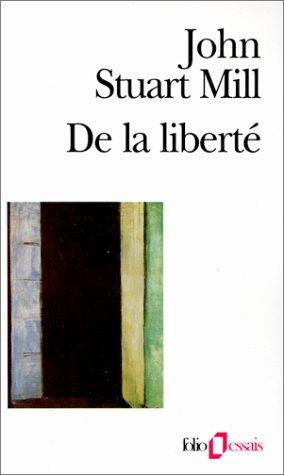
Liberté, Morale, Politique, Liberty
Book digitized by Google from the library of the New York Public Library and uploaded to the Internet Archive by user tpb.
Sign in to log this.
Spare, cool, contemplative and character-led.
No profiled raters yet.

No reviews yet. Yours would be the first word on it.
On Open Library, 16 have read it and 150 want to.
“THE subject of this Essay is not the so-called Liberty of the Will, so unfortunately opposed to the misnamed doctrine of Philosophical Necessity ; but Civil, or Social Liberty : the nature and limits of the power which can be legitimately exercised by society over the individual.”
John Stuart Mill (20 May 1806 – 8 May 1873), usually cited as J. S. Mill, was a British philosopher, political economist, and civil servant. One of the most influential thinkers in the history of liberalism, he contributed widely to social theory, political theory, and political economy. Dubbed "the most influential English-speaking philosopher of the nineteenth century", Mill's conception of liberty justified the freedom of the individual in opposition to unlimited state and social control. **Source**: [John Stuart Mill](https://en.wikipedia.org/wiki/John_Stuart_Mill) on Wikipedia.
Closest on the same fourteen dimensions, from everything scored on Taste Buds. Other media included when they land close.